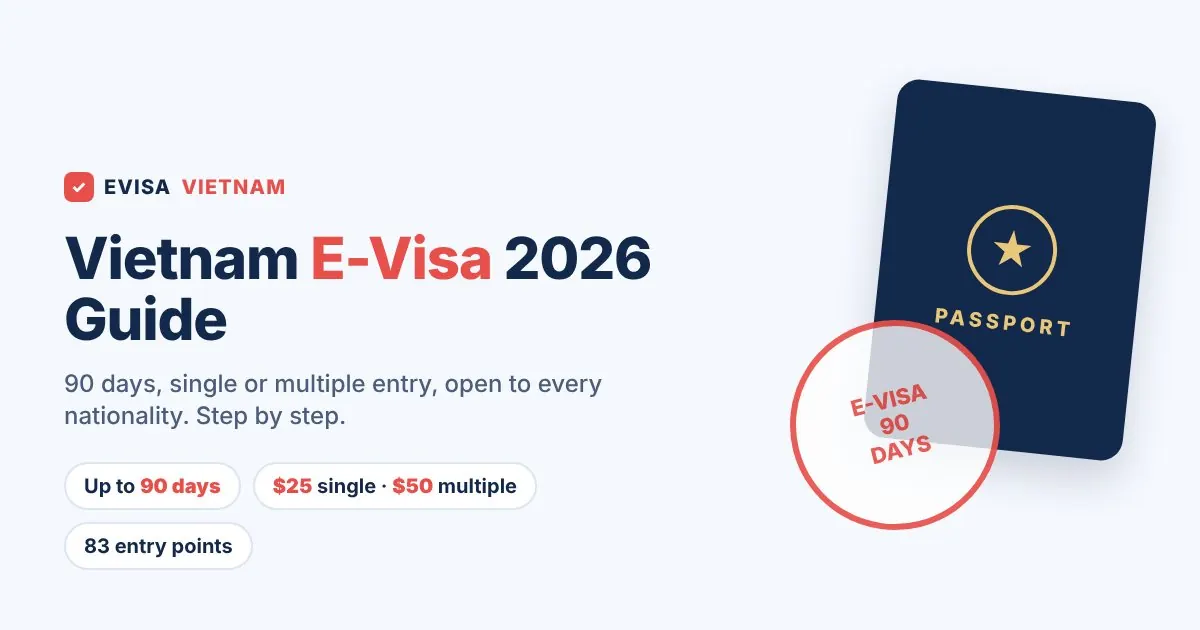
Yes, Chinese citizens need a visa to visit mainland Vietnam. Ordinary passports of the People’s Republic of China are not on Vietnam’s visa-free list. The simplest choice is the Vietnam visa for Chinese citizens issued online: a 90-day e-visa that costs US$25 for single entry or US$50 for multiple entry. It works at airports and also at the main land border gates with Guangxi and Yunnan, so it suits both flights and overland trips.
China sends more visitors to Vietnam than any other country, so this guide focuses on what Chinese travelers actually ask: which border crossings accept the e-visa, how to pay, what to do during Golden Week and Spring Festival, and where the Vietnamese missions in China are.
Vietnam visa for Chinese citizens: quick facts (November 2026)
- Visa needed: yes, for ordinary PRC passports.
- Best option: 90-day e-visa, US$25 single / US$50 multiple entry.
- Overland: the e-visa is valid at listed land gates such as Huu Nghi, Mong Cai and Lao Cai.
- Processing: about 3 working days in Vietnam.
- Time difference: Beijing time is 1 hour ahead of Vietnam.
Do Chinese citizens need a visa for Vietnam?
Yes. Vietnam’s unilateral visa exemption covers mostly European countries plus Japan and South Korea, while bilateral exemptions cover several ASEAN neighbours. China is in neither group, so a Chinese tourist or business traveler needs a visa for any stay outside the airport transit area. Holders of diplomatic or official passports follow separate agreements. Check the latest list in our guide to who is exempted from Vietnam visa.
There is one exception that matters for beach holidays: any foreign visitor can stay on Phu Quoc island for up to 30 days without a visa when arriving there directly from abroad.
How many Chinese citizens visit Vietnam?
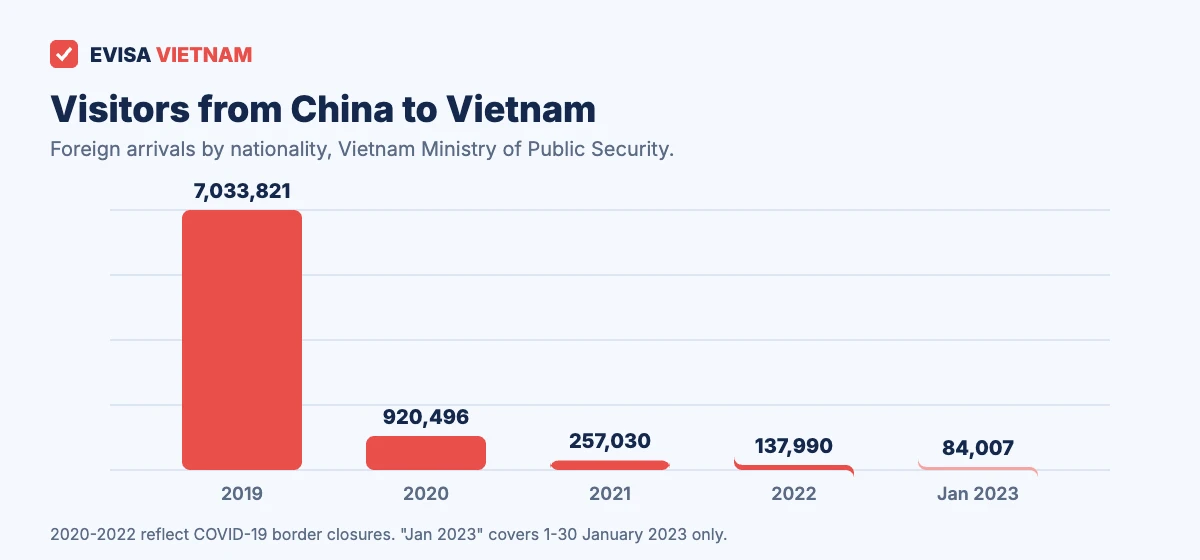
China is by far Vietnam’s largest source of visitors. According to the Ministry of Public Security, 7,033,821 Chinese citizens entered Vietnam in 2019, more than a third of all foreign arrivals that year. Arrivals then fell sharply and stayed low through 2022 (137,990), largely because China kept its own outbound travel restrictions until early January 2023. Since then, flights and border crossings have reopened.
Vietnam visa options for Chinese citizens
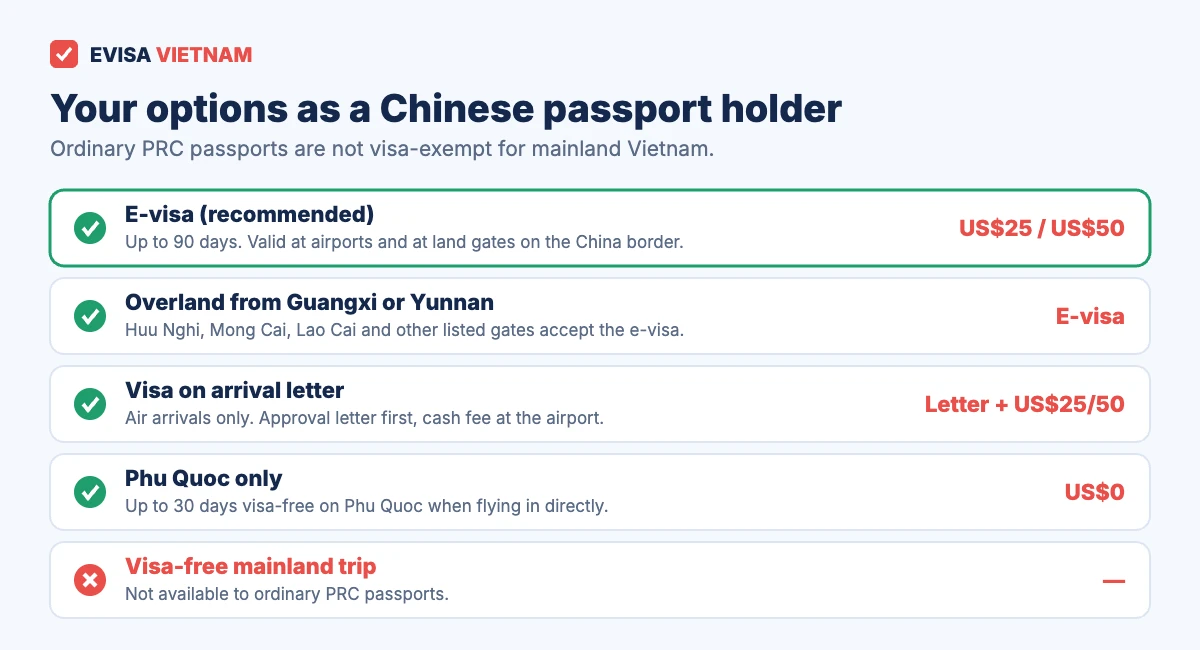
| Option | Length | Government fee | Where it works |
|---|---|---|---|
| E-visa | Up to 90 days | US$25 / US$50 | Airports, land gates and seaports on the official list |
| Visa on arrival (approval letter) | As stated on the letter | US$25 / US$50 cash + letter fee | International airports only |
| Embassy or consulate visa | Depends on type | Set by the mission | All gates |
| Phu Quoc exemption | Up to 30 days | Free | Phu Quoc island only |
Crossing the land border from China with an e-visa
Many Chinese visitors travel overland from Guangxi or Yunnan. Fortunately, the e-visa covers the main crossings. The original 2023 list already included Huu Nghi (Lang Son), Mong Cai (Quang Ninh) and Lao Cai. In December 2025, Resolution 389/NQ-CP added more gates, including the Dong Dang and Lao Cai railway gates and Thanh Thuy.
- From Pingxiang / Nanning: Huu Nghi (Friendship Pass) into Lang Son, then about three hours by road to Hanoi.
- From Dongxing: Mong Cai into Quang Ninh, close to Ha Long Bay.
- From Hekou / Kunming: Lao Cai, the gateway to Sa Pa.
- By train: the Dong Dang and Lao Cai railway gates now accept e-visas.
When you apply, choose the gate where you will actually cross. Then check your e-visa PDF: if it shows an entry gate, use that gate. Our guide to Vietnam e-visa ports of entry lists all 83 gates.
How to apply step by step
- Check your passport. It should be valid for at least six months after arrival and have blank pages.
- Prepare two images: a 4×6 cm portrait on a white background and the full passport data page. See our Vietnam visa photo guide.
- Write your name exactly as in the passport, in Latin letters (pinyin), with the same order of surname and given name.
- Apply on the official portal, evisa.gov.vn, or through a service. Our application form can be shown in simplified or traditional Chinese.
- Pay by international card. Make sure your bank card allows foreign online payments before you start.
- Print the e-visa and keep it with your passport for the airline and the border officer.
Timing: Golden Week, Spring Festival and Tet
Vietnam’s Tet holiday usually falls in the same weeks as Chinese Spring Festival. During Tet, the Immigration Department pauses processing, and in 2026 e-visas were not processed from 14 to 22 February. Likewise, demand rises before China’s National Day Golden Week (1–7 October). Therefore, apply at least two to three weeks before these holidays. Our guide to the Vietnam visa processing time explains how working days are counted.
How much does it cost?
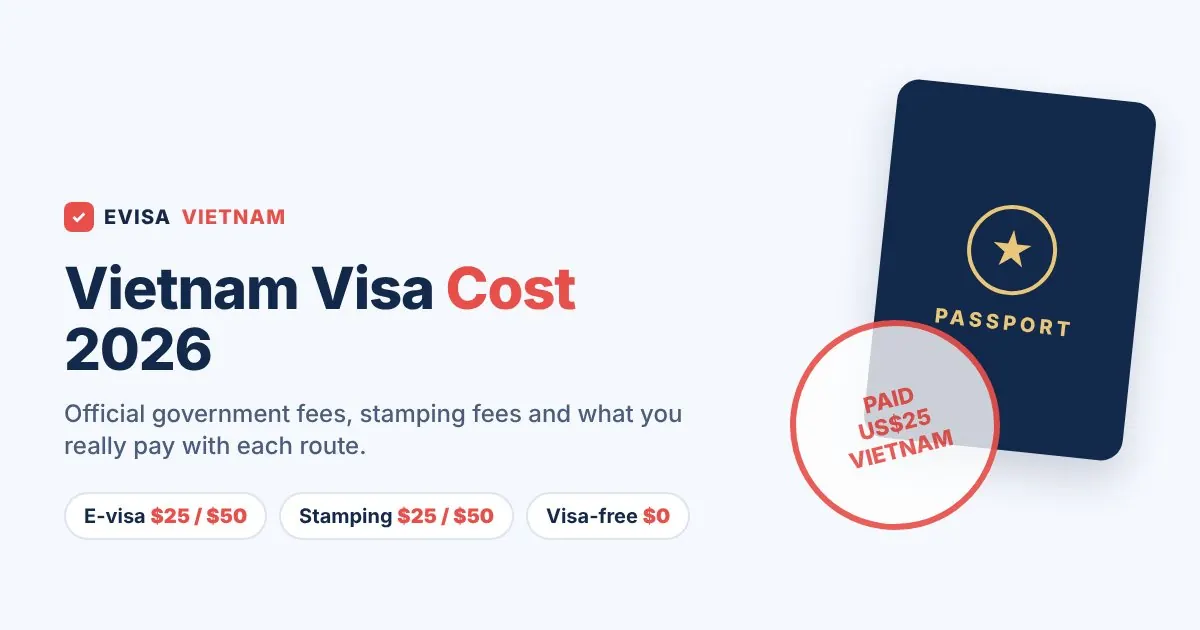
The government fee is US$25 for a single-entry e-visa or US$50 for multiple entry, the same for every nationality. If you use a service, you also pay its service fee, and the exact total for your nationality is shown before payment. See every route in our Vietnam visa cost guide.
Vietnamese embassy and consulates in China
You do not need to visit a mission for an e-visa. However, the embassy and consulates issue paper visas and help with special cases.
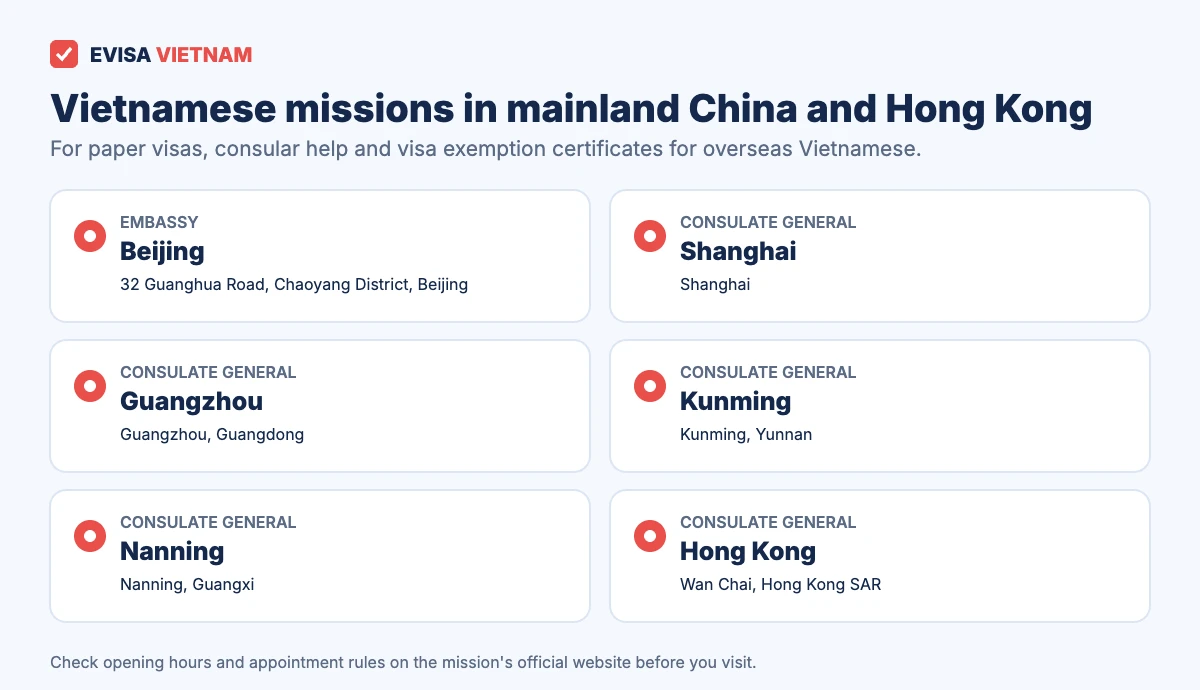
- Embassy of Vietnam, Beijing: 32 Guanghua Road, Chaoyang District.
- Consulates General: Shanghai, Guangzhou, Kunming, Nanning and Hong Kong.
Opening hours and appointment rules change, so check the mission’s official page before you go.
Chinese embassy and consulate in Vietnam
If you lose your passport or need consular help while in Vietnam, contact China’s diplomatic missions here:
- Embassy of the People’s Republic of China, Hanoi: for travelers in northern and central Vietnam.
- Consulate General of China, Ho Chi Minh City: for travelers in southern Vietnam.
In an emergency, you can also call the Chinese Ministry of Foreign Affairs global consular protection hotline, +86 10 12308. Keep a photo of your passport data page and your e-visa on your phone, because a replacement travel document and a new Vietnamese exit permission are both needed if your passport is lost.
Worked examples
- A family from Shenzhen, 6 days in Da Nang: each person, including the children, applies for a single-entry e-visa about three weeks before the flight. Four travelers pay 4 × US$25 = US$100 in government fees.
- A trader from Nanning crossing at Huu Nghi every month: a 90-day multiple-entry e-visa (US$50) covers repeated trips within its dates, as long as each crossing uses a listed gate.
- A couple flying Shanghai to Phu Quoc only: no visa is needed for up to 30 days, because they arrive on the island directly from abroad and stay there.
FAQ: Vietnam visa for Chinese citizens
Can Chinese citizens get a visa on arrival in Vietnam?
Only with an approval letter arranged before the flight, and only at international airports. It does not work at land borders. Read our guide to Vietnam visa on arrival.
Can I use the e-visa at the Hekou–Lao Cai border?
Yes. Lao Cai is on the official e-visa list.
Do Hong Kong and Macau passport holders follow the same rules?
They use the same e-visa system but hold different passports, so check the rules for your passport before you travel.
Do I need the Digital Arrival Card?
If you fly into Ho Chi Minh City, Hanoi, Da Nang, Phu Quoc or Cam Ranh, submit the free card within 72 hours before landing.
Sources: Vietnam National E-Visa Portal (evisa.gov.vn); Government Resolutions 127/NQ-CP (2023) and 389/NQ-CP (2025) on e-visa border gates; Government Resolutions 44/NQ-CP and 229/NQ-CP on visa exemption. Last reviewed: 9 November 2026. We are an independent visa service, not a government website.