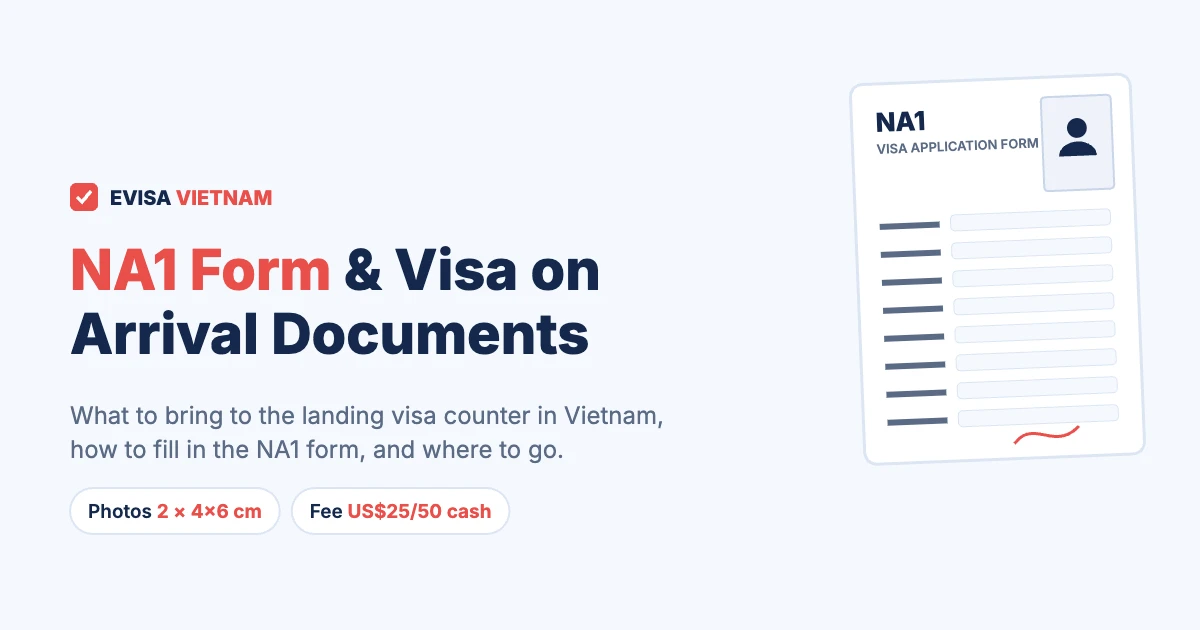
The NA1 form is Vietnam’s visa application form. If you use visa on arrival, you hand it in at the landing visa counter together with your passport, your printed approval letter, two 4×6 cm photos and the stamping fee in cash. Get any of these wrong and you wait longer at the airport, or in the worst case you cannot collect your visa.
This guide gives the complete document checklist, explains each part of the NA1 form in plain words, and shows where to pick up your visa on arrival, step by step.
Visa on arrival at a glance (November 2026)
- Documents: passport, approval letter, NA1 form, 2 photos (4×6 cm) and cash.
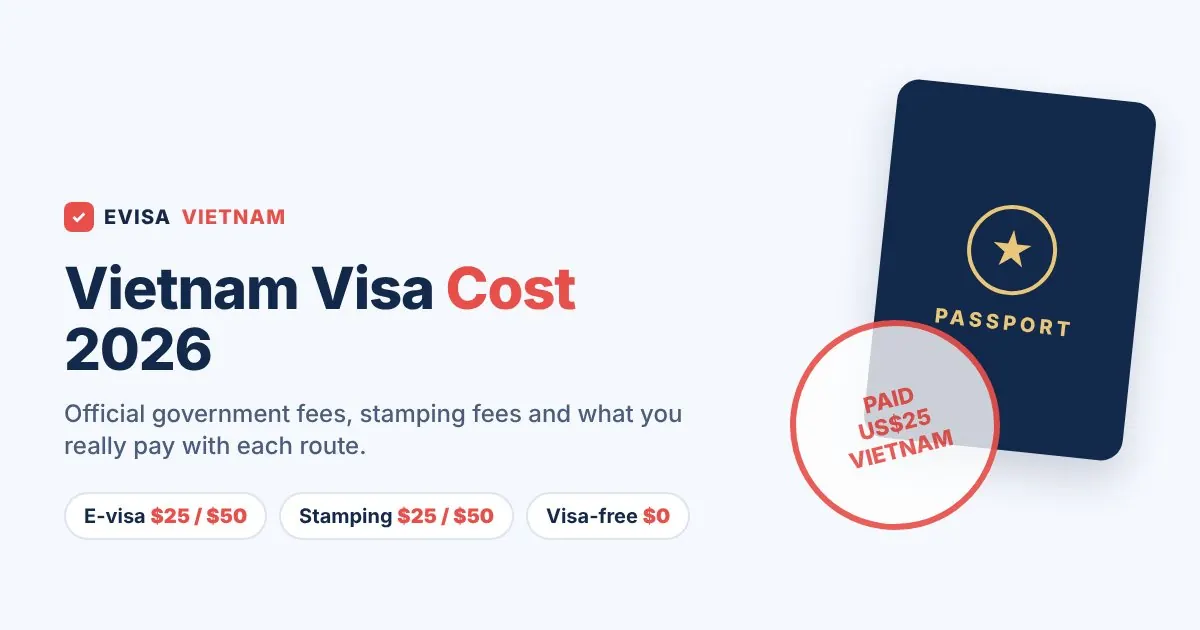
- Stamping fee: US$25 single entry or US$50 multiple entry, cash only.
- Where: the “Landing Visa” counter, before passport control.
- Airports only. Visa on arrival does not work at land borders or seaports.
- Also submit the free Digital Arrival Card if your airport uses it.
Visa on arrival documents checklist
Keep every item in your hand luggage, because you need them before you reach your checked bags.
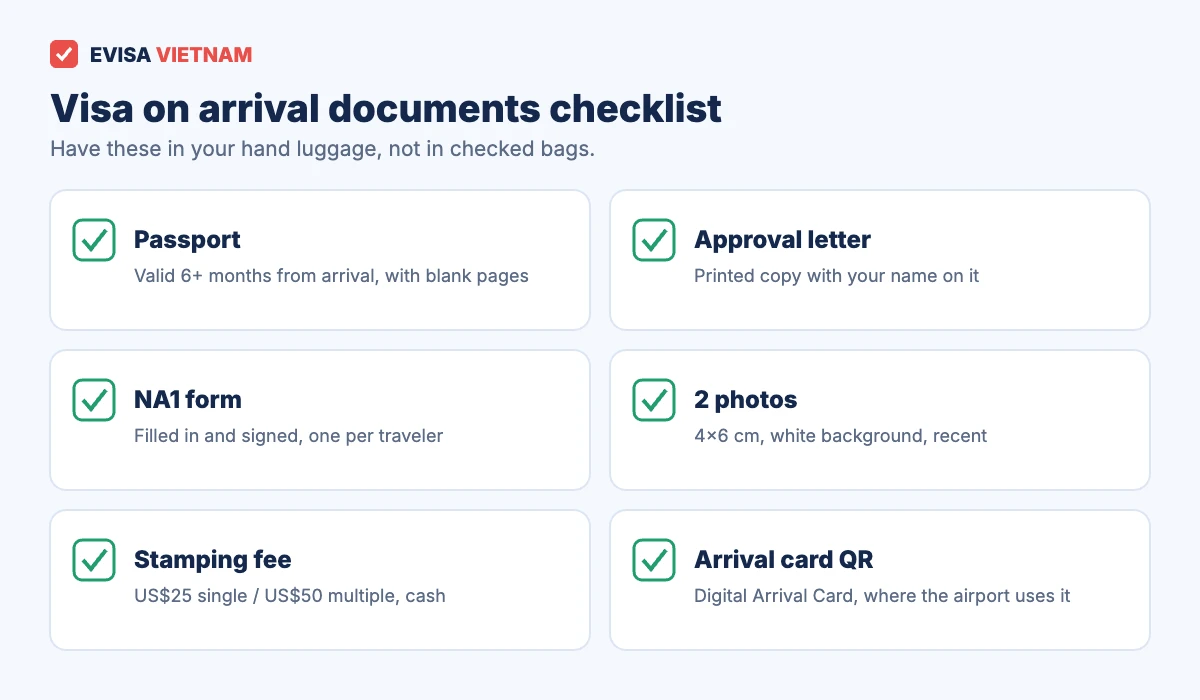
| Document | Details | Tip |
|---|---|---|
| Passport | Valid at least 6 months from arrival, with blank pages | The airline checks this too. |
| Visa approval letter | Printed, showing your name and passport number | Check spelling against your passport. |
| NA1 form | One per traveler, signed | Fill it in at home to save time. |
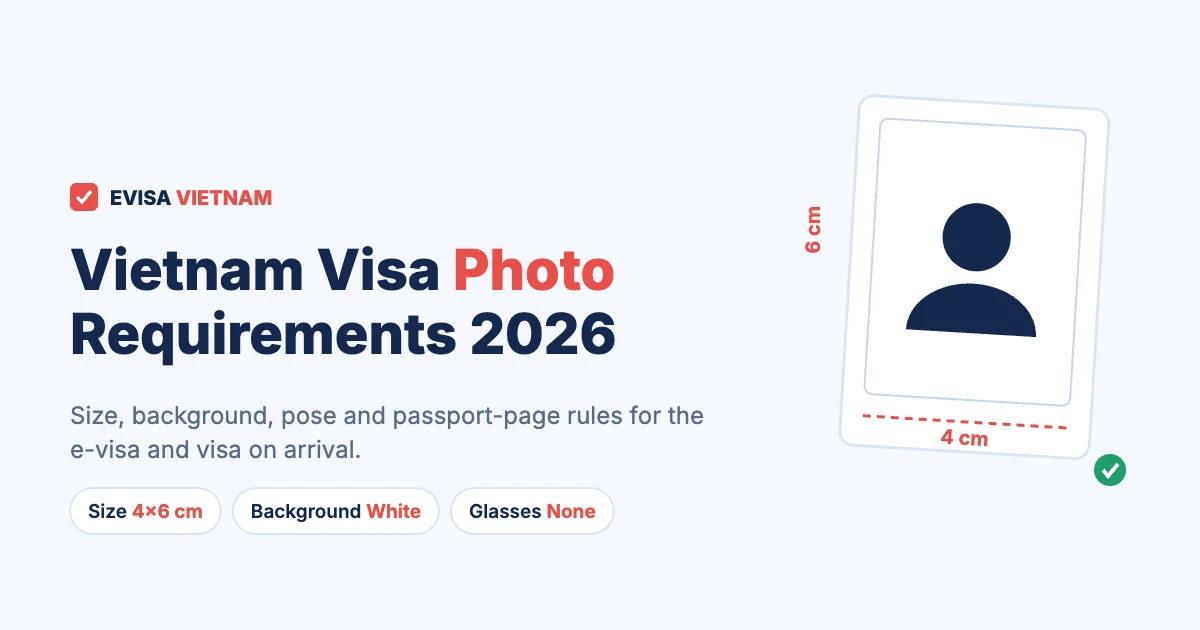
| Photos | Two, 4×6 cm, white background | Glue one onto the NA1 form. |
| Stamping fee | US$25 single / US$50 multiple | Clean US dollar notes, small values. |
For photo rules, see our Vietnam visa photo guide. For the letter itself, read what the visa approval letter is.
How to fill in the NA1 form
The NA1 form is a one-page application. Your agency usually sends a copy with the approval letter, and blank forms are also available at the counter. However, filling it in at home is faster and avoids mistakes. Write in capital letters and copy details exactly from your passport.
- Personal details: full name, sex, date and place of birth, nationality and religion. Use the same name order as your passport.
- Work and home: occupation, employer and your home address abroad.
- Passport: number, type, issuing authority and expiry date.
- Trip: intended date of entry, length of stay and purpose (for example, tourism).
- Address in Vietnam: your first hotel or the address of your host.
- Host or sponsor: the agency or company named in your approval letter, if asked.
- Children: children travelling on the same passport, if any.
- Visa requested: single or multiple entry and the dates, matching your letter.
- Photo and signature: glue a 4×6 cm photo in the box, then sign and date the form.
In short, the NA1 form must agree with your passport and your approval letter. If the three do not match, the officer may send you back to correct the form.
Where to pick up your visa on arrival
This is the step that confuses most first-time visitors. You do not go to passport control first. Instead, you go to the landing visa counter, which sits just before the immigration lanes.
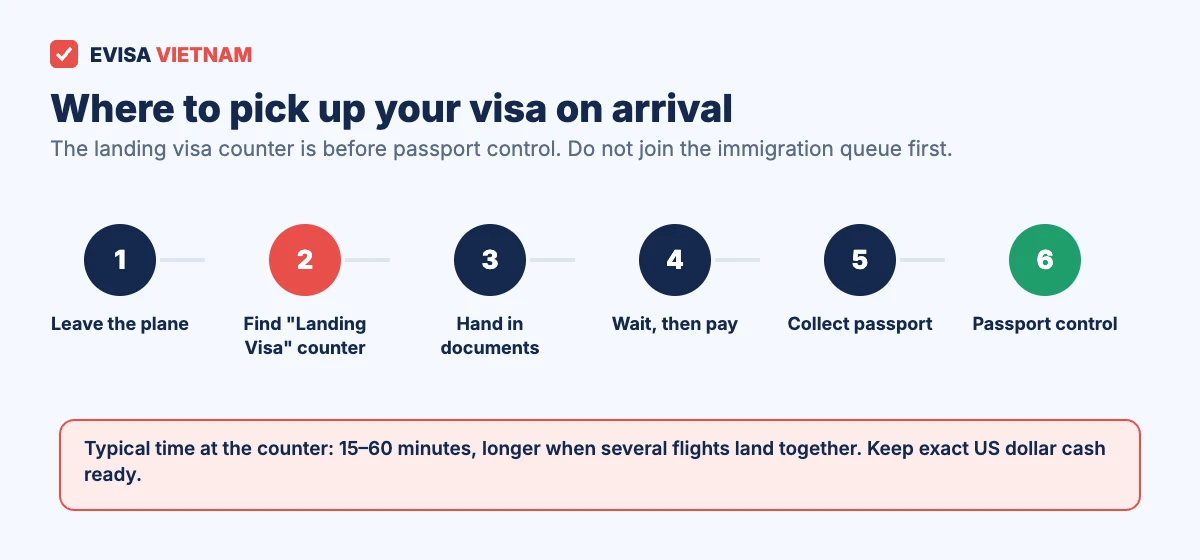
- Leave the plane and follow the signs for arrivals and immigration.
- Find the counter marked “Landing Visa” or “Visa on Arrival” before the passport lanes.
- Hand in your documents: passport, approval letter, NA1 form and photos.
- Wait until an officer calls your name, then pay the stamping fee and keep the receipt.
- Collect your passport and check the visa sticker: name, dates and number of entries.
- Join passport control, show your passport and, where required, the QR code from your Digital Arrival Card.
Usually this takes 15 to 60 minutes. Nevertheless, when several long-haul flights land together, the wait can be longer. For that reason, families and travelers with tight connections often book an airport fast-track service.
Which airports offer visa on arrival?
Landing visa counters operate at Vietnam’s main international airports, including Noi Bai (Hanoi), Tan Son Nhat (Ho Chi Minh City), Da Nang, Cam Ranh (Nha Trang), Phu Quoc, Cat Bi (Hai Phong) and others. Your approval letter names one arrival airport, so if your flight changes, tell your agency before you travel. Our guide to Vietnam e-visa ports of entry explains the options when plans change.
Common mistakes with visa on arrival documents
- No printed letter: airlines may refuse boarding without it, so print it before you leave home.
- Only cards, no cash: the counter takes cash. Bring US dollars in small notes.
- Forgetting photos: photo services at airports are not always open.
- Joining the wrong queue: passport officers will send you back to the visa counter.
- Arriving by land: visa on arrival works only at airports. Use the Vietnam e-visa for land and sea crossings.
Worked example: a couple landing in Hanoi
Tom and Priya land at Noi Bai at 9 p.m. with single-entry approval letters. At home, they printed their approval letter, filled in two NA1 forms and glued a photo on each. They also packed a spare photo each and US$50 in cash. At the counter they hand over two passports, two forms and the letter, then pay US$25 each when their names are called. After about 30 minutes they collect their passports, check the visa stickers, and walk to passport control with their Digital Arrival Card QR codes ready.
Is visa on arrival still worth it?
For most trips, the e-visa is simpler: you skip the counter and pay no letter fee. Visa on arrival still helps for some urgent air arrivals and special cases. Compare the two in our guide to Vietnam visa on arrival, and see every price in the Vietnam visa cost guide.
FAQ: NA1 form and visa on arrival documents
Do I need the NA1 form for an e-visa?
No. The NA1 form is for visas issued at the airport counter or at an embassy. E-visa holders go straight to passport control.
Can I fill in the NA1 form at the airport?
Yes, forms are available at the counter. However, doing it at home saves time.
Does each child need an NA1 form?
Children with their own passport need their own form, photos and fee.
Can I pay the stamping fee by card?
No. Bring cash, ideally US dollars.
What if I lose my approval letter?
Ask your agency to email it again and print it before departure. Without it, you cannot collect a visa on arrival.
Sources: Vietnam Immigration Department procedures for visas issued at international border gates; Circular 28/2026/TT-BTC on visa fees; Vietnam Immigration Department notices on the Pre-arrival Information system. Last reviewed: 9 November 2026. We are an independent visa service, not a government website.